
First Amendment Reminder
This is a reminder to all government and elected officials...
Your public social pages are likely considered town squares. They are subject to the same First Amendment protections as someone standing in front of the court house. If you make a post there, assuming it is something county/city related or your role as a government employee or elected official, you CANNOT delete comments that are made on that post by members of the public.
You cannot delete comments if they are made, particularly those that you do not agree with. Not only would it be a First Amendment violation, those comments are likely considered public record and may also violate public records laws.
In a similar manner, you cannot delete text messages, emails, messages received on social media and so on that are related to your jobs.... yes, even social media messages are likely public record depending on the topic.
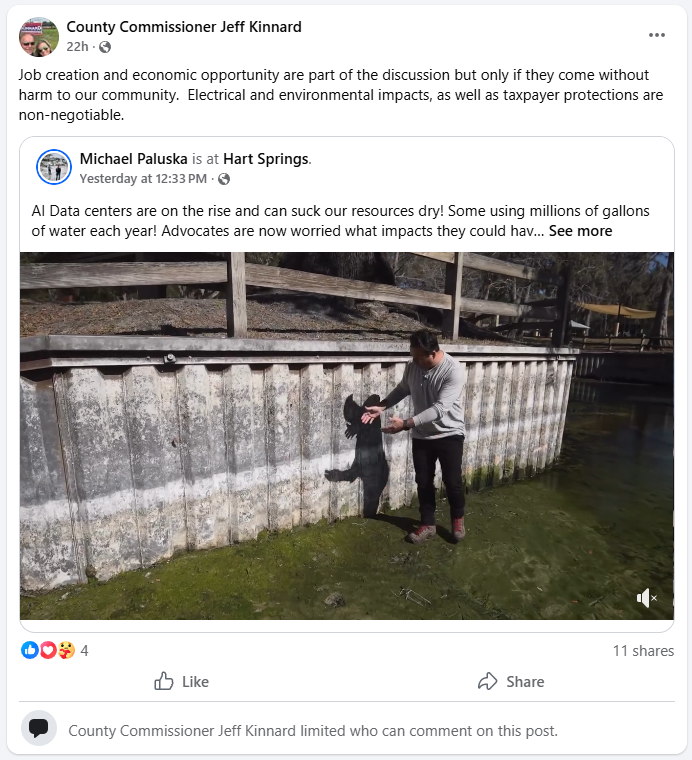
Recently, Commissioner Kinnard made this post on his official County Commissioner Page:
That post was originally not closed to public comment. Due to that, I made a comment on it, similar to what I shared on the Citrus Insider FB page. This was written from my personal page.
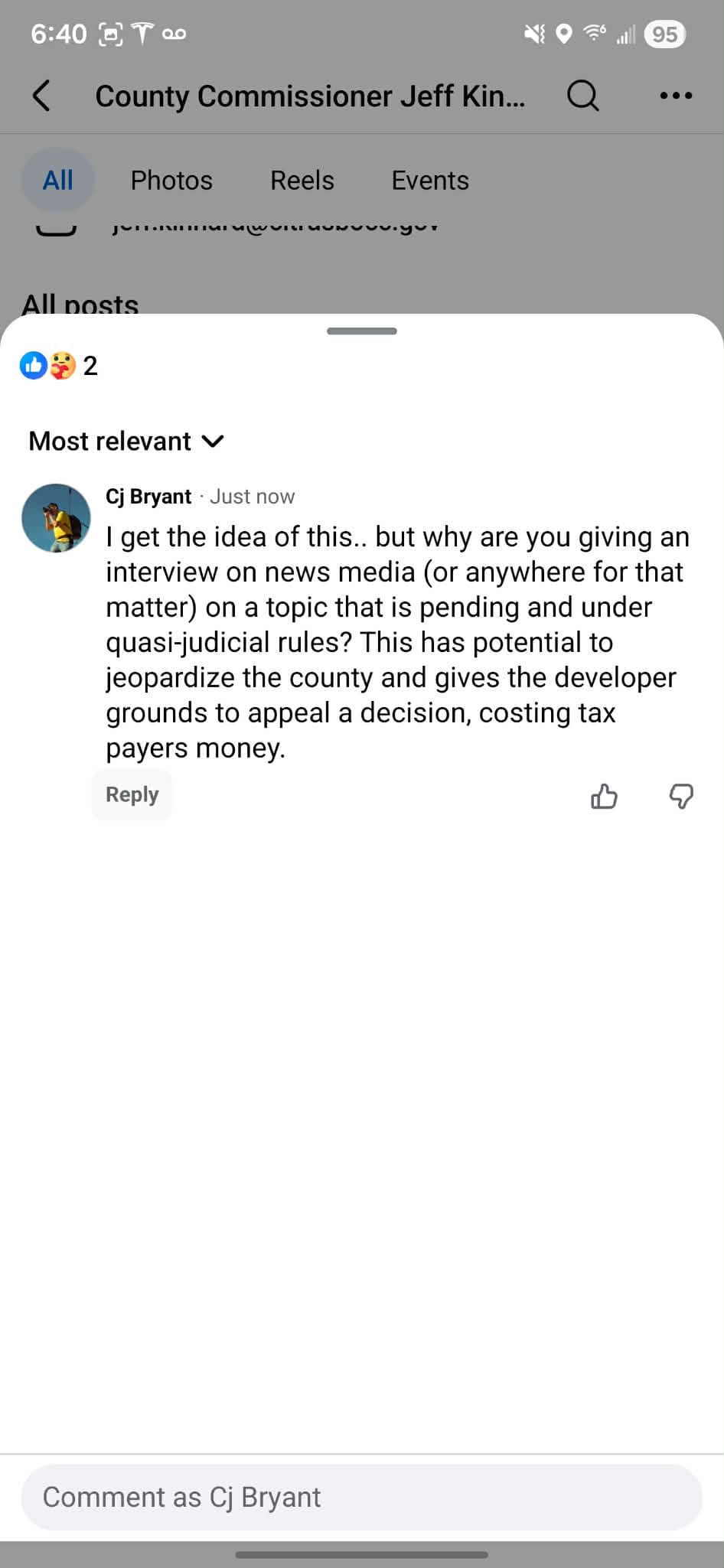
Here is proof that the comment was made on this post Kinnard made.
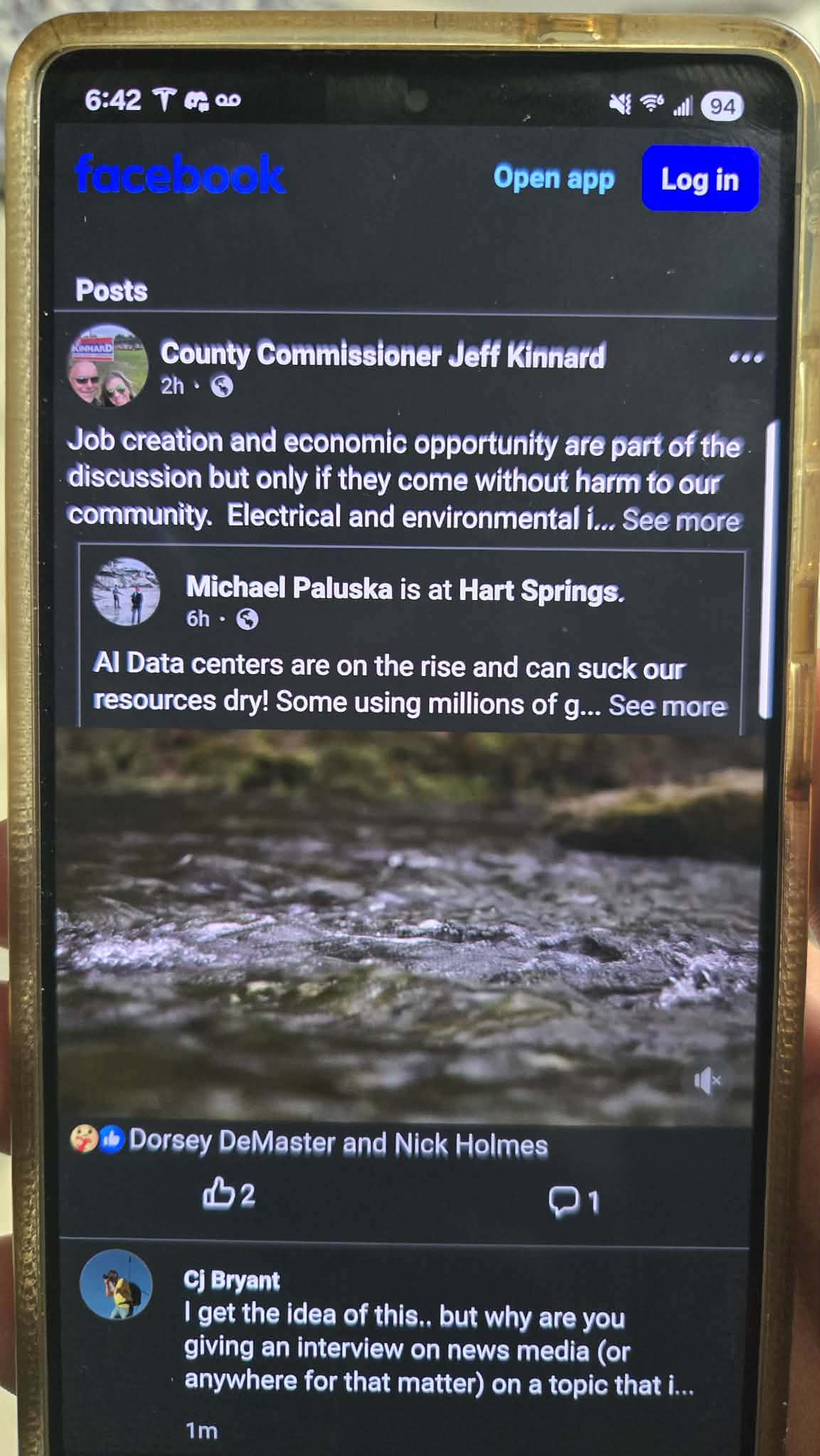
Within minutes, my comment was deleted and the post was locked down to not allow any further comments. However, as you see above, certain people are allowed to comment apparently. Curious who would be allowed to make a comment... and to that point.. if you allow one, you have to allow all.
That is the role of an elected official. If you open the door to social media, you open the door to everyone communicating with you on social media. You cannot limit who has access to your pages.
This stemmed from a 2021 lawsuit related to President Trump. He had blocked several people from communicating with his then Twitter page and deleted comments. The appeals court ruled that he was not allowed to do that. The Supreme Court tossed the decision as they said it was a moot point since he was no longer president and as such, can make those determinations (the blocking was done while he was president).
The Supreme Court came back in 2024 with the Linke v Freed case which discussed when a social media account is deemed to be from the state rather than personal in nature... the state being government here and not the actual state.
There is a two tier test to determine if a social media post is an official post or a personal one that stems from 42 U.S.C SS 1983.
The person making the post
1) possessed actual authority to speak on the State's behalf on a particular matter
2) purported to exercise that authority when speaking in the relevant social-media post.
With the post in question... Kinnard absolutely has authority to speak on Citrus County's behalf. He is a sitting commissioner, not an employee in some division that would need approval to speak. He does not need permission.
Test one... passed.
Did he exercise that authority with this interview? Yes, he was speaking as Commissioner Kinnard, not citizen Kinnard. He was speaking from his viewpoint as an elected official giving an opinion on something he has a vote on. He mentions what he would look at before approving a project and stated he's willing to "hold their feet to the fire". That is speaking with authority on the matter.
Test two... passed.
Keep in mind, this also his county commission account, NOT a personal account. There is nothing posted on there that is personal in nature. It is all government related and related to his job as a commissioner. There is no confusion between what is personal and what is "official". It is titled "County Commissioner Jeff Kinnard".. that makes it an official page.
Is it a violation?
The Supreme Court states:
(a) Section 1983 provides a cause of action against “[e]very person who, under color of any statute, ordinance, regulation, custom, or usage, of any State” deprives someone of a federal constitutional or statutory right.
Deleting social media comments from citizens who desire to comment deprives them of a federal constitutional right... from an official page no less.
I would also argue that limiting comments at all would be a violation... so making a post and then turning off comments, may very well violate this law as well... because it is restricting speech... no different than stopping someone from speaking out front of the courthouse or on a public sidewalk. Point here is if you make the post that satisfies those two tests, then do not limit who can comment on it.
Don't like public engagement, don't make the post.
The First Amendment does not end with social media.